
The short answer
Duct cleaning is worth doing when there's a specific reason, such as visible debris, pests, mold, recent remodeling, or an unknown service history. We inspect first. Then we recommend cleaning, targeted repairs, or replacing damaged runs based on what we actually find in your system.
Your ductwork carries all the air your heating and cooling system conditions. Because it sits out of sight in the attic, crawlspace, or walls, problems tend to go unnoticed. In Reseda and the rest of the San Fernando Valley, ducts work hard. Summers run much hotter here than near the coast, and fall Santa Ana winds push fine dust into attics and return grilles. AdvancedAir Contractors cleans, inspects, and repairs duct systems for homeowners in Reseda, Tarzana, Northridge, Encino, Van Nuys, Canoga Park, Winnetka, and nearby areas. This page explains when cleaning actually helps, what we look at, when a repair makes more sense than a replacement, and what to expect during a visit.
Signs Your Ducts Need Attention
Not every home needs routine duct cleaning. It makes the most sense when there's a specific reason. These are the ones we see most often:
Some symptoms look like a dirty-duct problem but have a different cause. Rooms that stay hot or cold, weak airflow at a few registers, or a system that runs constantly often point to crushed, disconnected, or leaking ducts. Cleaning won't fix those problems, which is why we inspect before we recommend anything.
- Dust or debris blowing out of supply registers when the system starts
- Return grilles, and the wall or ceiling around them, that turn gray soon after you wipe them down
- Filters that clog much faster than the package suggests
- Rodent droppings, insects, or nesting material in the attic or near duct runs
- A musty smell when the system runs, or visible mold on duct surfaces or the coil
- Recent remodeling, drywall work, or floor sanding while the system was running
- A home you recently moved into where you don't know when the ducts were last serviced
What We Check
A duct cleaning visit starts with an inspection, not a vacuum hose. Before any work begins, we want to know what's in the system and what condition it's in. Here's what we look at:
Where we can, we use a camera to look inside runs we can't see directly. You'll see what we see, and we'll walk you through it before recommending cleaning, repair, or both.
- Supply registers and return grilles, including how much debris has built up behind them
- The return plenum and filter rack, where dust usually collects first
- The blower compartment and, where accessible, the evaporator coil
- Flex duct runs in the attic for kinks, sags, crushed sections, and torn outer jackets
- Connections at the plenum, boots, and branch takeoffs for gaps or failed tape
- Signs of pests, moisture, or mold
- The condition of insulation on ducts that run through hot attic space
Clean, Repair, or Replace?
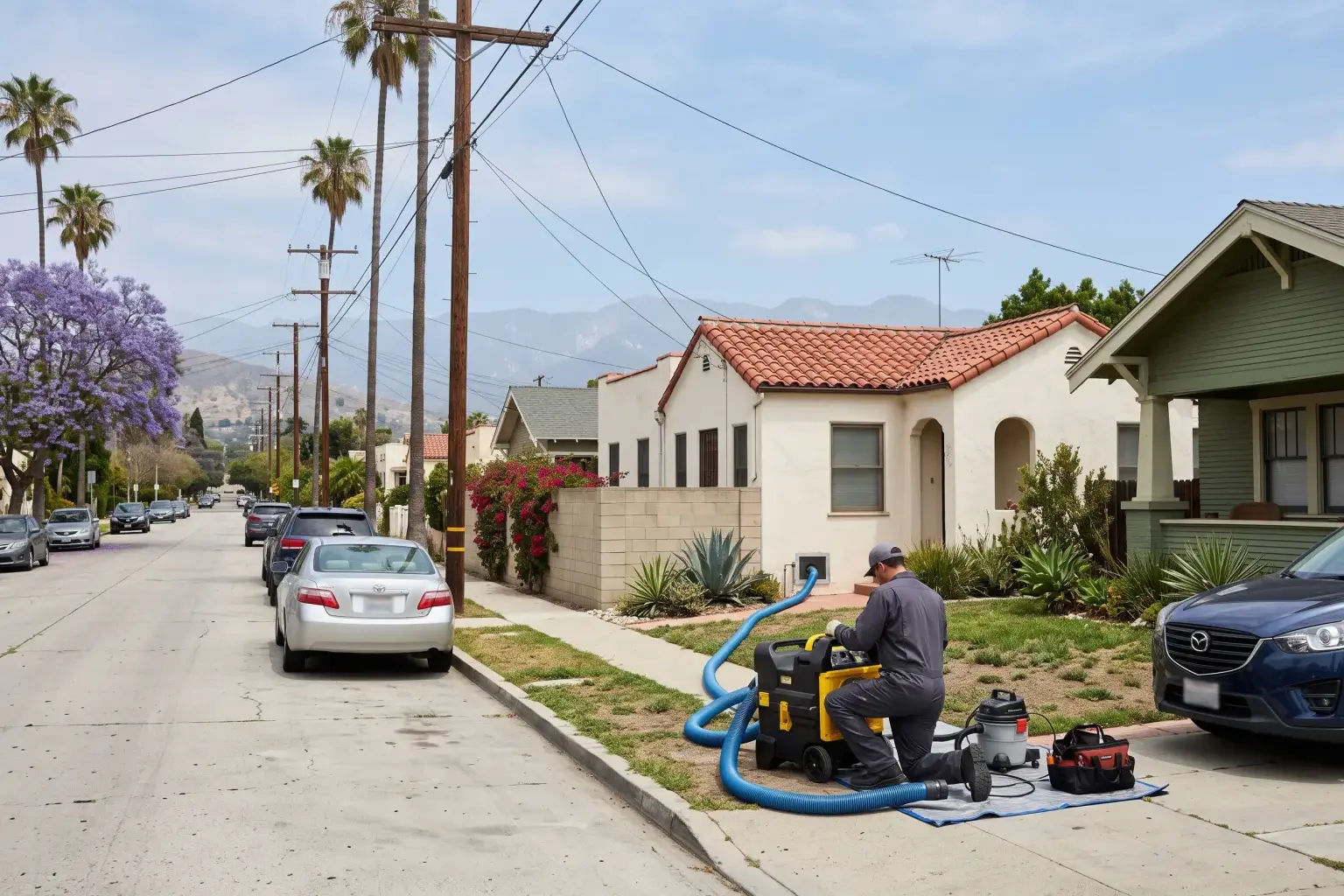
Cleaning makes sense when the ductwork itself is in good shape but has collected dust, construction debris, or pest material. We use negative-pressure equipment to pull debris toward a collection point while we agitate the inside of the duct. Then we clean the registers, grilles, and return side. On flex duct, we use methods that won't tear the inner liner.
Repair is the right call when the system is mostly sound but has specific problems. These include a disconnected run, a section crushed under stored boxes, leaky joints, or a damaged boot. These fixes are usually targeted, and they can make a noticeable difference in the rooms those runs serve. In hot Valley attics, sealing leaks also keeps cooled air from escaping into the attic.
Replacement is worth considering in several situations: flex duct that is old and brittle, an outer jacket that is falling apart, degraded insulation, widespread pest contamination, or a layout that never delivered enough air to certain rooms. Contaminated flex duct often can't be cleaned effectively, and replacing it is usually more practical than repeated patching. If you're also replacing your furnace or AC, evaluate the ducts at the same time, because new equipment needs ductwork sized to match.
If that larger project includes a new gas furnace, South Coast AQMD Rule 1111 limits NOx emissions from furnaces installed in this region. The district has been revising the rule toward zero-emission requirements, so we check the current compliance dates when planning. If you're considering a heat pump, LADWP customers may qualify for a rebate based on the unit's efficiency ratings. The application is filed after installation, within 12 months of purchase. Some nearby homes are served by Southern California Edison instead, so we confirm what's available for your address before quoting it.
What Affects the Cost
We don't quote a flat number before seeing the system, because duct jobs vary a lot from house to house. These are the factors that drive the price:
After the inspection, you get a written scope that lists what we recommend and why. That way you can decide what to do now and what can wait.
- The number of supply registers and return grilles
- The size of the home and the total length of duct runs
- Whether the ducts are in an attic, a crawlspace, or between floors, and how easy they are to reach
- Duct type: flex duct, sheet metal, or duct board
- How much debris is present, and whether there's pest or mold contamination
- Whether repairs, sealing, or section replacement are needed in addition to cleaning
- Added work such as coil or blower cleaning
How a Duct Cleaning Visit Works
Here's what a typical appointment looks like from start to finish:
Most households can stay home during the visit. Expect some noise from the equipment, and plan to give us clear access to the attic or crawlspace.
- When we schedule, we ask about your symptoms, pets, and any areas that are hard to reach.
- On arrival, we put down floor protection and shut the system off.
- We inspect the registers, return, air handler, and accessible duct runs, and we show you what we find.
- We explain our recommendation and get your approval before starting any work.
- We cover the registers, connect our collection equipment, and clean each run.
- We clean the grilles and registers, install a clean filter, and check the system when it restarts.
- We review the work with you, including photos and anything we'd keep an eye on going forward.