
The short answer
Most indoor air problems, such as constant dust, musty smells, stuffy rooms, and dry air, come from the HVAC system: a poorly fitting filter, leaky ducts, a dirty coil or blower, or a return that pulls in attic or garage air. We inspect the system, explain what we find, and usually start with repairs before recommending upgrades or replacement.
Indoor air quality in a San Fernando Valley home depends heavily on the HVAC system. Your furnace and air conditioner move the air in the house through the same ducts and filter many times a day. When that system is dirty, leaky, or poorly balanced, dust, odors, and humidity problems follow it into every room. AdvancedAir Contractors helps homeowners in Reseda and nearby areas such as Tarzana, Northridge, Encino, Canoga Park, and Van Nuys find what is actually causing their air problems. We then explain what will fix them, without pushing equipment they don't need.
Signs Your Home's Air Needs Attention
Valley summers are hot and dry, and fall Santa Ana winds can push dust and dry air into homes for days at a time. With the windows shut and the AC running hard, whatever is in the system gets recirculated. These signs usually point to the HVAC system rather than housekeeping:
None of these signs alone proves something is wrong. Two or three together usually mean the system is worth a closer look.
- Dust settles on furniture within a day or two of cleaning
- Dust buildup or dark streaks around supply registers
- A musty or stale smell when the system starts up
- A dusty or burning odor that lingers well past the first few heating cycles of the season
- Allergy or sinus symptoms that feel worse indoors than outside
- Some rooms feel stuffy while others feel drafty
- Very dry air, with static shocks, dry skin, or cracking wood furniture
- Filters that clog quickly or turn gray within a few weeks
What We Check During an Indoor Air Quality Visit
An indoor air quality visit starts with the system that moves the air. We look at the equipment, the ductwork, and how air actually flows through your house.
We explain what we find in plain terms and show you photos when we can, so you can see the problem for yourself.
- Filter size, fit, and rating, and whether air is slipping around the filter through gaps in the rack or cabinet
- The blower wheel and motor, for dust buildup that cuts airflow
- The evaporator coil and condensate drain, for buildup, standing water, or signs of microbial growth
- The return air path: whether it is large enough and sealed, or pulling air from the attic, garage, or wall cavities
- Accessible duct runs and connections, for leaks, disconnected sections, crushed flex duct, and damaged insulation
- Supply registers and grilles, for dirt patterns that point to leaks
- Airflow and temperature readings, to see whether the system moves enough air
- Gas furnace venting and a visual check of the heat exchanger, plus a carbon monoxide check around fuel-burning equipment
- Indoor humidity levels
Repair, Upgrade, or Replace: Your Options
Most indoor air quality problems are solved by fixing the existing system rather than replacing it. Sealing a leaky return, correcting a filter that doesn't fit, cleaning a dirty coil and blower, or clearing a clogged drain line often makes a noticeable difference on its own.
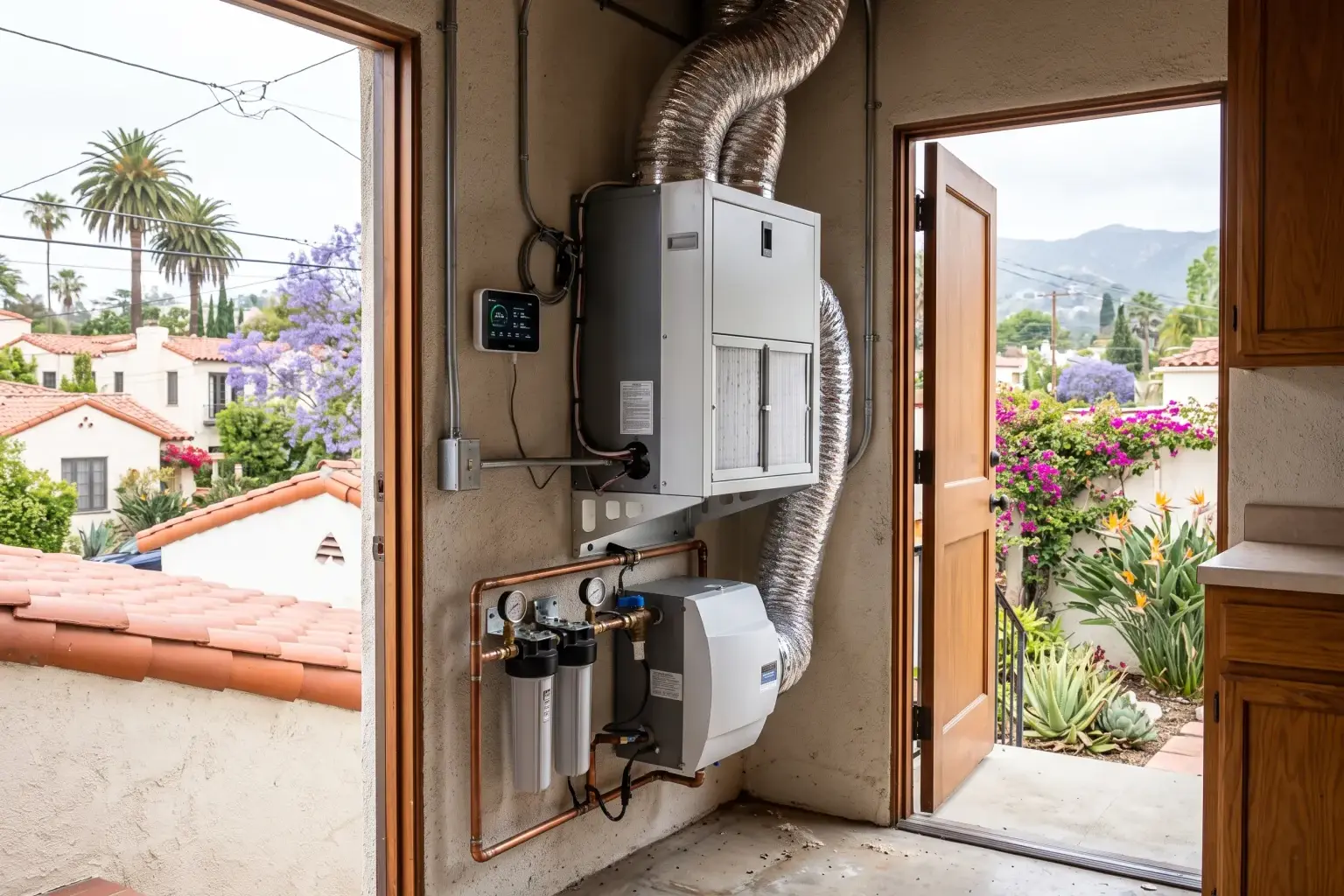
When repairs aren't enough, upgrades can help. A media filter cabinet holds a thicker filter that captures more fine particles without choking airflow. Sealing ducts or replacing damaged sections keeps attic and garage air out. Some homes benefit from a humidifier for dry spells, ventilation that brings in filtered outdoor air, or an air cleaner matched to the system. We recommend these only when the inspection shows a reason.
Replacement makes sense when the equipment is near the end of its life, the ductwork is badly deteriorated, or the system is too mismatched to the house to move air properly. If you are thinking about replacing a gas furnace, South Coast AQMD Rule 1111 limits NOx emissions from gas furnaces sold and installed in this region. The district has been amending the rule toward zero-emission requirements and sets and revises the compliance dates, so check the current rule before deciding. A heat pump is one alternative. LADWP residential customers can apply for rebates on qualifying heat pump systems after installation, within 12 months of purchase. Homes served by Southern California Edison have different options, so we confirm what applies to your address. The federal 25C tax credit for heat pumps is no longer available for new installations.
What Affects the Cost
We don't quote a price until we've seen the system, because the work varies a lot from house to house. The main factors are:
After the inspection, we explain your options in writing, so you can compare a simple repair with a larger upgrade.
- Whether the fix is cleaning and repair or new equipment
- Where the equipment and ducts are located, such as a tight attic or crawlspace
- How much ductwork needs sealing, repair, or replacement
- The size of the home and the number of rooms served
- The type of filter cabinet, air cleaner, or humidifier you choose
- Whether electrical work, drain changes, or permits are needed
- The age and condition of the existing system
How a Visit Works
When you contact us, we'll ask what you're noticing, which rooms are affected, roughly how old the system is, and whether anyone in the house has allergies or breathing concerns. That helps the technician come prepared.
At your home, the technician starts by talking with you. Then they inspect the equipment, filter, and accessible ductwork, take airflow and humidity readings, and check fuel-burning appliances. Please make sure someone is home and that there is clear access to the furnace or air handler, the attic hatch if ducts run there, and the thermostat.
Before any work begins, we walk you through what we found and your options, from simplest to most involved. Small repairs, such as fixing a poorly fitting filter or clearing a drain line, can often be done during the same visit. Larger work is scheduled at a time that suits you.
We'll also suggest simple habits, like how often to check your filter and when to run the fan, that help keep the air cleaner between visits.