The short answer
If your furnace blows cool air, short-cycles, makes new noises or won't ignite, it likely needs repair. Most problems, such as a failed igniter, dirty flame sensor or worn blower part, can be fixed in one visit. Replacement makes more sense when the heat exchanger is cracked or major repairs keep adding up.
Most furnaces in Reseda and the rest of the San Fernando Valley sit idle for much of the year, then get switched on when the first cool nights arrive. That long rest is often when problems show up: a burner that won't light, a blower that pushes cold air, or a smell that wasn't there last winter. AdvancedAir Contractors repairs gas furnaces and the thermostats, blowers and ductwork connected to them for homeowners in Reseda, Northridge, Tarzana, Encino, Canoga Park, Winnetka, Van Nuys and nearby communities. This page covers the warning signs, what we inspect, how to decide between repair and replacement, what affects the cost, and what to expect from a visit.
Signs Your Furnace Needs Repair
Furnaces rarely fail without warning. Small changes in how the system starts, sounds or smells usually come first, and catching them early can keep a minor fix from turning into a bigger one.
If you smell gas or your carbon monoxide alarm goes off, leave the house right away. Don't flip switches or use anything that could spark, and call your gas utility's emergency line from outside. Once the utility has made the area safe, we can diagnose and repair the furnace.
- Air from the vents feels cool or lukewarm while the thermostat is calling for heat
- The furnace starts, shuts off after a few minutes, and repeats
- Clicking at startup with no ignition, or several tries before the burners light
- Banging, rattling, squealing or humming from the cabinet or ducts
- Some rooms stay noticeably colder than others
- A burning-dust smell that doesn't fade after the first run of the season
- Burner flames that look yellow or flickering instead of steady blue
- Gas bills rising without a change in how you use the heat
- The blower runs nonstop, or won't run at all
What We Check During a Furnace Repair Visit
A repair visit starts with finding the actual cause, not just treating the symptom. Our technician works through the system in order, from the thermostat to the flue.
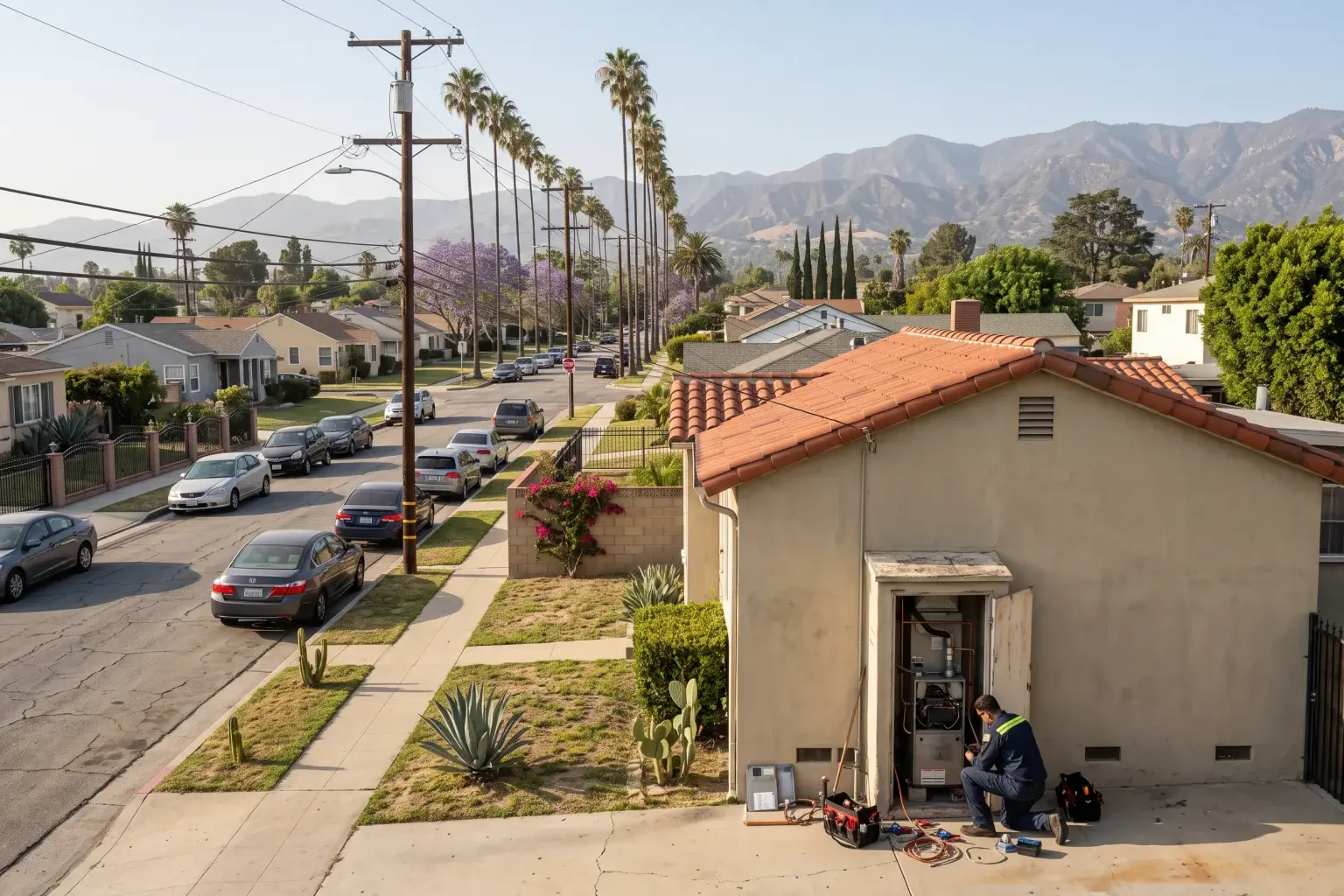
Many Valley furnaces are installed in attics or garages, where hot summers, dust and pests can wear on wiring, filters and duct joints during the off-season. We look for that kind of wear while we're there.
- Thermostat settings, wiring and power
- Air filter condition and airflow at the return and supply vents
- Igniter or pilot assembly, flame sensor and gas valve
- Burner condition and flame pattern
- Heat exchanger, checked for cracks, rust or signs of overheating
- Flue and venting, to confirm combustion gases leave the home properly
- Blower motor, capacitor and wheel
- Limit switch, pressure switch and inducer motor
- Control board error codes
- Duct connections near the furnace
Repair or Replace: Weighing Your Options
Most furnace problems are repairable. A failed igniter, dirty flame sensor, worn capacitor or clogged filter can usually be handled in one visit, and fixing those parts often keeps a furnace running well for more seasons. We'll tell you plainly when a repair makes sense.
Replacement deserves a look when the heat exchanger is cracked, when an older furnace needs a major part, or when repairs keep stacking up. A cracked heat exchanger can let combustion gases into your home's airflow, so we won't recommend running a furnace in that condition.
If you're considering a new gas furnace, know that South Coast AQMD Rule 1111 limits nitrogen oxide emissions from natural-gas central furnaces sold and installed in the Los Angeles region, and the district has been amending it toward zero-emission requirements. The district sets and revises the compliance dates, so check the current rule before choosing equipment. We can walk you through what applies.
Many homeowners look at a heat pump instead, since it heats and cools with one system. LADWP residential electric customers can apply for Consumer Rebate Program rebates on qualifying heat pump systems, with the amount based on the unit's SEER2 and HSPF2 ratings; the application is filed after purchase and installation, within 12 months of purchase. Some homes in nearby cities outside the City of Los Angeles are served by Southern California Edison, so available rebates depend on your utility, and we confirm the current offer before quoting it. The federal 25C tax credit covered heat pumps placed in service before December 31, 2025, and is not available for new installations now.
What Affects the Cost of Furnace Repair
We give you a clear quote after diagnosis and before any work begins. The total depends on several factors. When both repair and replacement are reasonable, we'll lay out each option so you can compare.
- Which part failed, and whether it's a common part or a manufacturer-specific component
- Parts availability for your furnace's brand and model, especially on older units
- Where the furnace is installed, such as an attic, closet, garage or crawlspace, and how easy it is to reach
- Whether the problem is one failed part or several related issues
- Whether ductwork, venting or electrical work is involved
- Timing, such as requests outside regular hours during a cold spell
How a Furnace Repair Visit Works
To help the visit go smoothly, clear a path to the furnace, note when the problem started, and keep pets in another room. If the furnace has a blinking status light, a photo of it can help our technician.
- You contact us and describe what the furnace is doing, including any sounds, smells or blinking lights
- We schedule a convenient arrival window
- Our technician asks a few questions, then inspects the system
- We explain what we found in plain terms, show you the problem part when possible, and give you options with a quote
- With your approval, we make the repair, then run a full heating cycle and test the safety controls
- Before leaving, we check the filter and mention anything else worth watching
Furnace Repair by city
- Furnace Repair in Hidden Hills
- Furnace Repair in San Fernando
- Furnace Repair in Calabasas
- Furnace Repair in Simi Valley
- Furnace Repair in Agoura Hills
- Furnace Repair in Beverly Hills
- Furnace Repair in Burbank
- Furnace Repair in West Hollywood
- Furnace Repair in Santa Clarita
- Furnace Repair in Santa Monica
- Furnace Repair in Los Angeles
- Furnace Repair in Westlake Village