The short answer
You likely need a new furnace if yours is aging, needs frequent repairs, heats unevenly, or has safety issues like a damaged heat exchanger. We inspect the system first, explain whether repair or replacement makes more sense, and walk you through gas furnace and heat pump options under current Los Angeles-area air quality rules.
When a furnace stops keeping up, Reseda homeowners usually want two answers: does it need to be replaced, and what will the new system involve? Our winters are mild, so many furnaces run only part of the year and can stay in service longer than expected. That also means problems often go unnoticed until the first cold night. AdvancedAir Contractors installs and replaces furnaces for homes in Reseda and nearby Valley neighborhoods, including Tarzana, Northridge, Canoga Park, Winnetka, Encino, and Van Nuys. This page explains the signs that point toward replacement, what we inspect before recommending anything, your options for repair or replacement, what drives the cost of a project, and how a visit works.
Signs It May Be Time for a New Furnace
Southern California furnaces often run for only a few months each year. Because of that, wear can build up slowly and go unnoticed. These are the signs we hear about most often from Valley homeowners:
- The furnace needs repairs every season, or the same part keeps failing.
- Some rooms stay cold while others overheat, even with the vents open.
- The burner flame looks yellow or flickers instead of burning steady blue.
- You hear banging, rattling, or screeching when the system starts or runs.
- Your gas bills climb even though your thermostat habits haven't changed.
- You notice soot, rust, or a persistent dusty or burning smell near the unit.
- A technician has found cracks or corrosion in the heat exchanger.
- The furnace is old enough that replacement parts are hard to find.
What We Check Before Recommending Anything
We don't recommend a new furnace until we understand why the current one is struggling. Sometimes the problem is the duct system or the thermostat, and a new furnace alone would not fix it. A typical inspection covers the items below.
If anything points to a safety concern, such as a possible carbon monoxide risk, we explain what we found and what it means before discussing next steps.
- Heat exchanger condition, looking for cracks, rust, or signs of overheating
- Burners, ignition system, and flame sensor
- Gas supply, connections, and shutoff
- Venting and flue pipe, including clearances and drafting
- Blower motor, belt or direct drive, and airflow across the system
- Filter condition and return air sizing
- Ductwork for leaks, crushed runs, or disconnected sections, especially in attics
- Thermostat wiring, settings, and placement
- Whether the current furnace is properly sized for the home
Repair or Replace: Your Options
If the furnace is in reasonable shape and the problem is a single failed part, such as an igniter, flame sensor, or blower motor, a repair is often the sensible choice. If the heat exchanger is damaged, repairs keep piling up, or the system can no longer heat the home evenly, replacement usually makes more sense over time.
When replacement is the right call, there are generally two directions. The first is a new natural gas furnace. In the Los Angeles region, South Coast AQMD Rule 1111 limits nitrogen oxide emissions from gas fan-type central furnaces sold and installed here. The district has been amending the rule toward zero-emission requirements and sets and revises the compliance dates, so we check the current rule when planning any gas furnace replacement.
The second option is an electric heat pump, which heats in winter and cools in summer. In the Valley, where summers run much hotter than near the coast and fall Santa Ana winds can bring hot, dry spells, many homeowners like replacing an aging furnace and an aging air conditioner with one system. If your home is served by LADWP, qualifying heat pump systems may be eligible for a Consumer Rebate Program rebate based on the unit's SEER2 and HSPF2 ratings. You apply after the equipment is purchased and installed, within 12 months of purchase. Some homes in surrounding areas are served by Southern California Edison instead, so available rebates depend on your utility. We confirm the current offer before including it in a quote. Note that the federal 25C tax credit for heat pumps applied only to systems placed in service before December 31, 2025, and is not available for new installations.
What Affects the Cost of a Furnace Installation
Every home is different, so we quote after seeing the space and the existing system. These are the main factors that shape the cost of a project:
- Type of system: gas furnace, heat pump, or a heat pump paired with a gas furnace
- Size and efficiency rating of the new equipment
- Furnace location, such as an attic, garage, closet, or crawlspace, and how easy it is to access
- Condition of existing ductwork and whether repairs, sealing, or replacement are needed
- Venting changes required for the new unit
- Electrical upgrades, which are more common when switching to a heat pump
- Gas line modifications, if any
- Thermostat upgrades or added controls
- Permits and inspections required by the city
- Removal and disposal of the old equipment
How a Visit Works
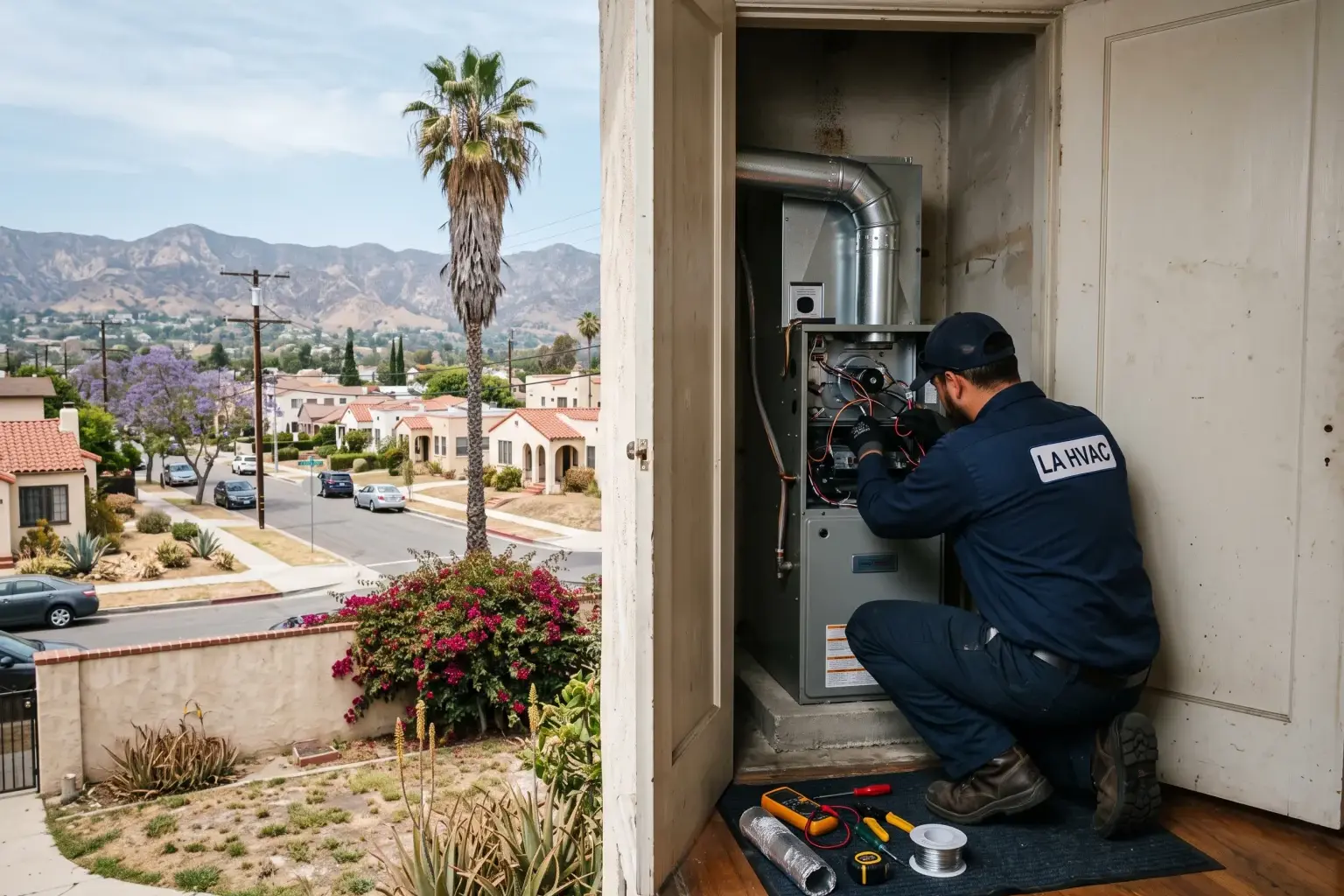
We start by asking what you've noticed, such as cold rooms, noises, smells, or rising bills, and how long it's been going on. Then the technician inspects the furnace, venting, ductwork, and thermostat. You'll get a plain explanation of what we found, including photos when they help.
If repair makes sense, we tell you. If replacement makes more sense, we review the options that fit your home and budget, explain the tradeoffs between gas and heat pump systems, and note any rules or rebates that may apply at your address. You get a written quote describing the equipment and the work included.
On installation day, we protect floors and work areas, remove the old unit, install and connect the new system, and test it for safe operation and proper airflow. Before we leave, we show you how to use the thermostat, where the filter goes, and how often to change it.